BREATHWORK BENEFITs
SCIENCE BASED
Reduces Stress and Anxiety
Activates the parasympathetic nervous system (“rest and digest”) through slow, deep breathing.
Lowers cortisol and adrenaline levels, reducing stress and overwhelm.
Promotes relaxation and decreases symptoms of anxiety disorders.
Improves Emotional Regulation
Enhances connection between the prefrontal cortex (rational brain) and amygdala (emotional center).
Helps manage emotional reactivity, anger, or frustration.
Encourages self-awareness and calm in challenging situations.
Strengthens Respiratory and Cardiovascular Function
Increases oxygen efficiency and carbon dioxide tolerance, improving endurance and focus.
Slows heart rate and regulates blood pressure.
Supports healthier vagal tone, improving resilience to stress.
Improves Sleep Quality
Calms the nervous system and reduces nighttime overthinking.
Helps balance melatonin and serotonin, supporting deeper, more restorative sleep.
Boosts Focus, Clarity, and Cognitive Performance
Enhances alpha brain wave activity, linked to creativity and calm alertness.
Increases mental clarity, attention, and decision-making ability.
Supports mindfulness and present-moment awareness.
Supports Trauma Release and Emotional Healing
Encourages safe processing of stored emotions through somatic awareness.
Reduces physiological signs of hyperarousal (fight/flight/freeze).
Used in trauma-informed therapies and somatic psychology.
Enhances Energy and Vitality
Improves oxygen delivery to tissues and brain.
Balances the autonomic nervous system, creating steadier, sustainable energy levels.
Helps overcome fatigue and emotional burnout.
Builds Connection and Presence
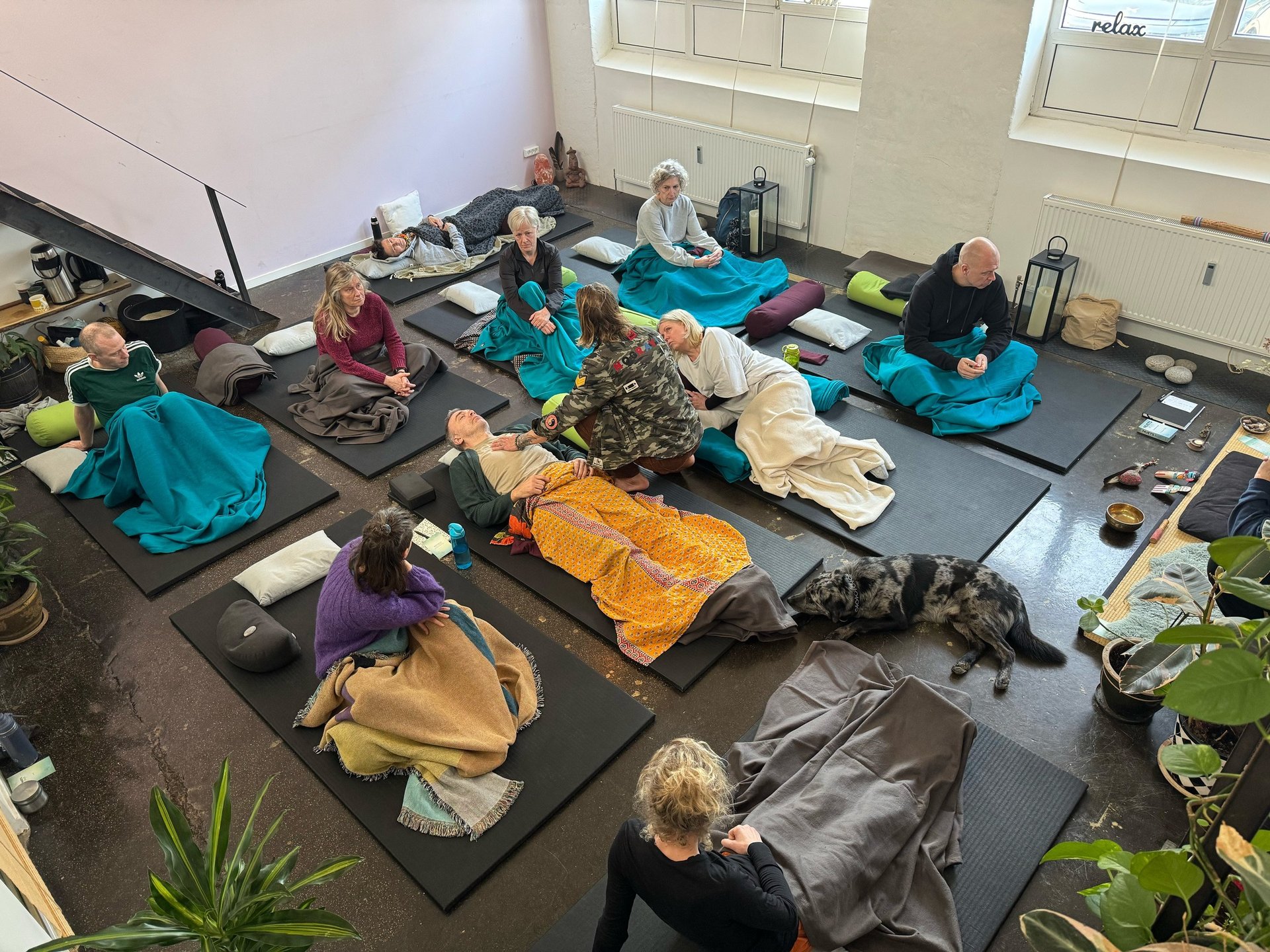
Promotes empathy and connection in group settings (team or classroom environments).
Strengthens sense of belonging, trust, and shared calm.
Strengthens the Immune System
Stimulates the lymphatic flow and circulatory system, supporting detoxification.
Reduces chronic stress — a key factor in immune suppression.
Improves overall body regulation and resilience to illness.

















SCIENTIFIC STUDIES
Effect of Breathwork on stress and mental health
A large review of 26 scientific studies found that practicing breathwork can noticeably reduce stress, anxiety, and symptoms of depression compared to people who don’t use breathing techniques.
Researchers note that while results are very positive, more long-term studies are needed to fully understand which types of breathing work best and how often we should practice them.
Source Fincham, G.W., Strauss, C., Montero-Marin, J. et al. Effect of breathwork on stress and mental health:
A meta-analysis of randomised-controlled trials. Sci Rep 13, 432 (2023)
Brief structured respiration practices enhance mood and reduce physiological arousal
A remote randomized controlled study found that doing just five minutes of daily, structured breathing exercises (particularly exhale-focused “cyclic sighing”) improved mood and reduced physiological markers of stress (like lower breathing rate) more than mindfulness meditation. The findings suggest that simple breathing exercises may be effective for managing stress and improving emotional well-being in everyday settings — although the authors note that more long-term and diverse research is needed to confirm how best to apply it.
Source Melis Yilmaz Balban 1, Eric Neri 2, Manuela M Kogon 2,3, Lara Weed 4, Bita Nouriani 2, Booil Jo 2, Gary Holl 1, Jamie M Zeitzer 2,5, David Spiegel 2,6,∗, Andrew D Huberman 1,7,8,9,∗∗ Brief structured respiration practices enhance mood and reduce physiological arousal Cell Rep Med. 2023 Jan 10;4(1):100895. doi: 10.1016/j.xcrm.2022.100895

BREATH-LETTER SIGNUP
CONTACT
LEGAL NOTICE
Nogravity Esben Seir I CVR: 32519156 I Siljangade 1, 2300 Copenhagen Denmark
POWERED BY